

Author Spotlight: Esther Knight
Author of the Rebecca DeToledo Medieval Mystery Series
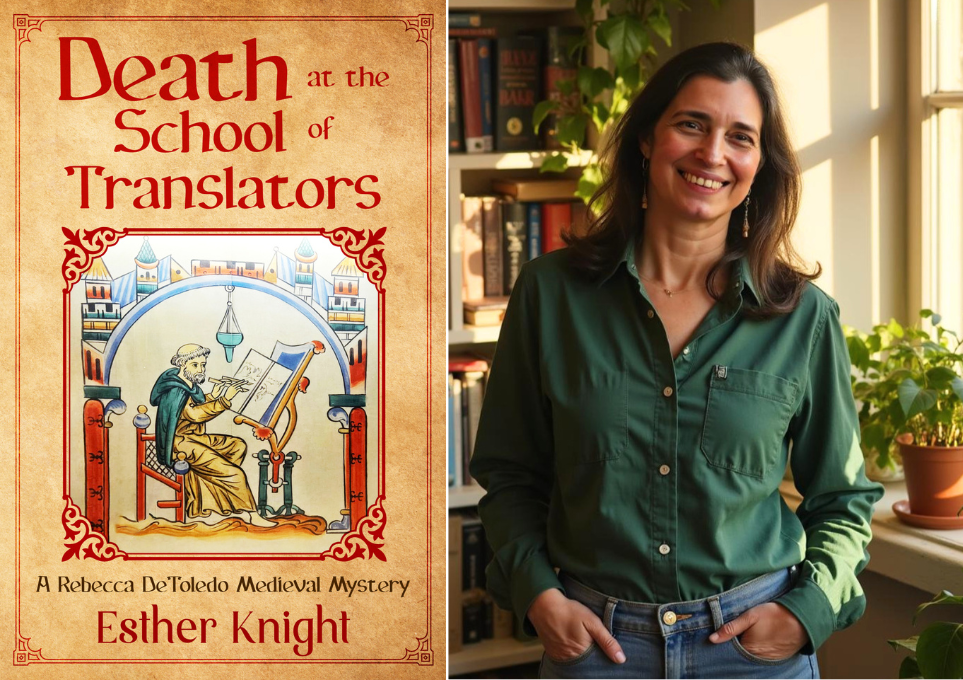
Esther Knight is the author of Death at the School of Translators, the first book in the Rebecca DeToledo Medieval Mystery Series. Image credit: Esther Knight
Esther Knight is the author of the Rebecca DeToledo Medieval Mysteries, a historical medieval mystery series set in 12th-century Toledo. The amateur sleuth is Rebecca DeToledo, a gifted healer and wealthy Jewish heiress who solves whodunits with the help of Sir John of Hampstead, a disillusioned crusader.
Cozy Crime Reads Interview with Esther Knight
What attracted you to the cozy mystery genre?
I came to it through reading rather than a deliberate genre choice. I'd been a mystery reader for years, and when I started imagining my own stories, I knew I wanted something that balanced intrigue with richness: history, character, atmosphere. The puzzle at the center, the amateur sleuth who has no business solving murders but can't help herself — those elements spoke to me immediately.
That said, I should be upfront: I'd actually describe my books as historical medieval mysteries rather than cozies in the traditional sense. I think "cozy" can send the wrong signal to readers. I have an amateur sleuth in the center of my stories, she has a cat, and a ‘policeman’ she investigates with. But my stories are darker in tone, the stakes are real, and the world Rebecca inhabits — 12th-century Toledo, where a woman's safety is never guaranteed — doesn't totally lend itself to the lightness usually associated with cozy. If that's your kind of cozy, you'll love it. But I'd rather set honest expectations.
What are a few of the essential elements that make a cozy stand out to you as a reader?
A sleuth I genuinely want to spend time with. That's first. The puzzle matters, but if I don't care about the person solving it, I'm gone by chapter two. Also, I love romantic sub-plots, and I have one in mine. After that: a sense of place that feels lived-in. In a newsletter to my subscribers I wrote about what cozy means to me. I used Phryne Fisher as an example plus a favorite TV series of mine— Sister Boniface:
What Sister Boniface and Phryne Fisher show me: the cozy formula works because it's fundamentally about belonging and disruption. Rebecca is a Jewish healer in a city ruled by Christians. She has her community, her obligations, her boundaries. And she keeps crossing them — dragged by that same impossible combination of conscience and curiosity.
Our heroines are women rooted somewhere — a convent, a Jewish quarter, a fancy villa in St Kilda, Melbourne — and yet they all choose, again and again, to get out of that safety into danger. The contrast is what creates the warmth. You feel the community more because it keeps getting threatened.
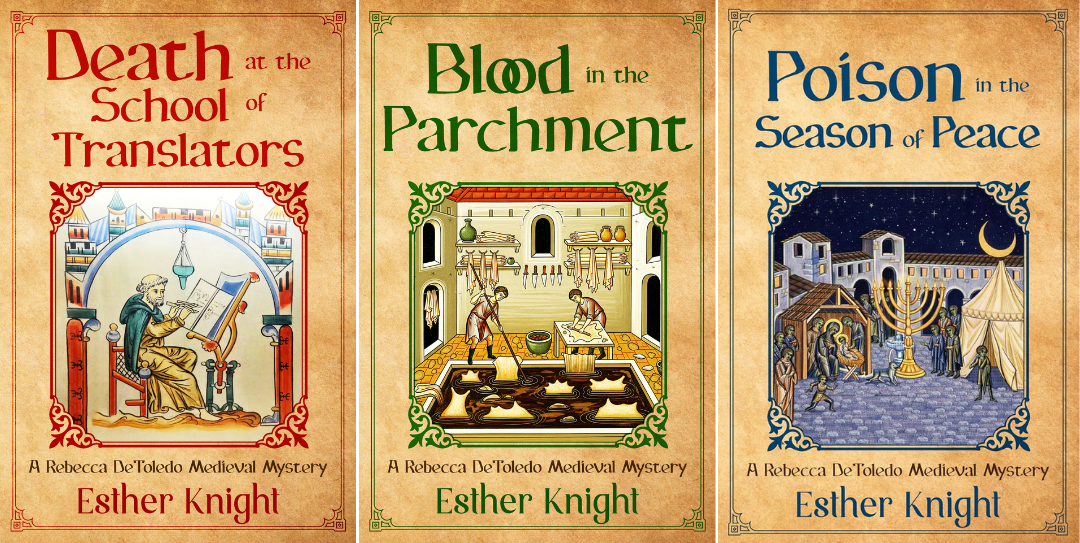
Books 1-3 in the Rebecca DeToledo Medieval Mystery Series
Do you have a favorite amateur sleuth?
Catherine LeVendeur, from Sharan Newman's medieval mystery series. She's a 12th-century woman navigating faith, intellect, and danger. Newman's historical research is extraordinary, and Catherine feels genuinely of her time while still being completely compelling to a modern reader. She was a real influence on how I write Rebecca. Also, of course, Phryne Fisher.
What inspired your first cozy mystery?
I read Ivanhoe as a girl and was captivated by Rebecca, the Jewish healer, the one with the real moral courage, the one who didn't get the happy ending.
A single question inspired me: what if Rebecca had her own adventures?
Years later I learned there's a rumor that Scott based her on a real woman, Rebecca Gratz, a Jewish philanthropist in early American society. Whether or not that's true, the idea stayed with me. When I started writing, I thought: what if this woman lived in medieval Spain, where she could be surrounded by the collision of Christian, Muslim, and Jewish cultures? What if she had a community, a voice, a chance to shape her own story? That became Rebecca DeToledo, and Death at the School of Translators was born.
How do you research and create the elements in your books, such as the setting and community?
I travel. I've walked the streets of Toledo, visited the Santa María de la Blanca Synagogue, and stayed in a hotel in the heart of the Jewish quarter. I've also been to Seville, Granada, and Córdoba. There's something you can only get from being physically present in a place.
Beyond the travel, I dig into academic sources, medieval chronicles, and primary texts. For Blood in the Parchment, I researched the slaughter quarter in Toledo in detail and how hides were processed, where tanners were located relative to the river, what it would have smelled like.
What is one key step in your writing process that helps you transform an idea into a finished book?
My plotting chart. After I write the first messy draft, I build a visual map of the story in Canva — a color-coded cork board of scenes, organized by day, with separate colors for Rebecca's POV and John's POV. It lets me see the whole shape of the story at once: where tension rises, where one character has gone silent for too long, where the pacing drags. The chart is where I make sure the structure actually holds.
What advice would you give aspiring cozy mystery authors who want to start writing their first novel?
Start with your sleuth, not your plot. Know who your protagonist is, what she wants, what she's afraid of, what makes her impossible to ignore. The mystery will follow. Also, I start every story with deciding on the villain and plan their crimes and motivations first. What led them to commit that most horrific of crimes: murder. I try to write it backwards: from denouement to climax to investigation.
How can readers connect with you online?
Subscribe to my newsletter: https://estherknightauthor.kit.com/home
It is the best place to find me. I share research, behind-the-scenes glimpses of the writing process, and exclusive excerpts.
I'm also on Instagram at instagram.com/medieval.author and Facebook at facebook.com/EstherKnightAuthor

Death at the School of Translators (Rebecca DeToledo Medieval Mystery Book 1)
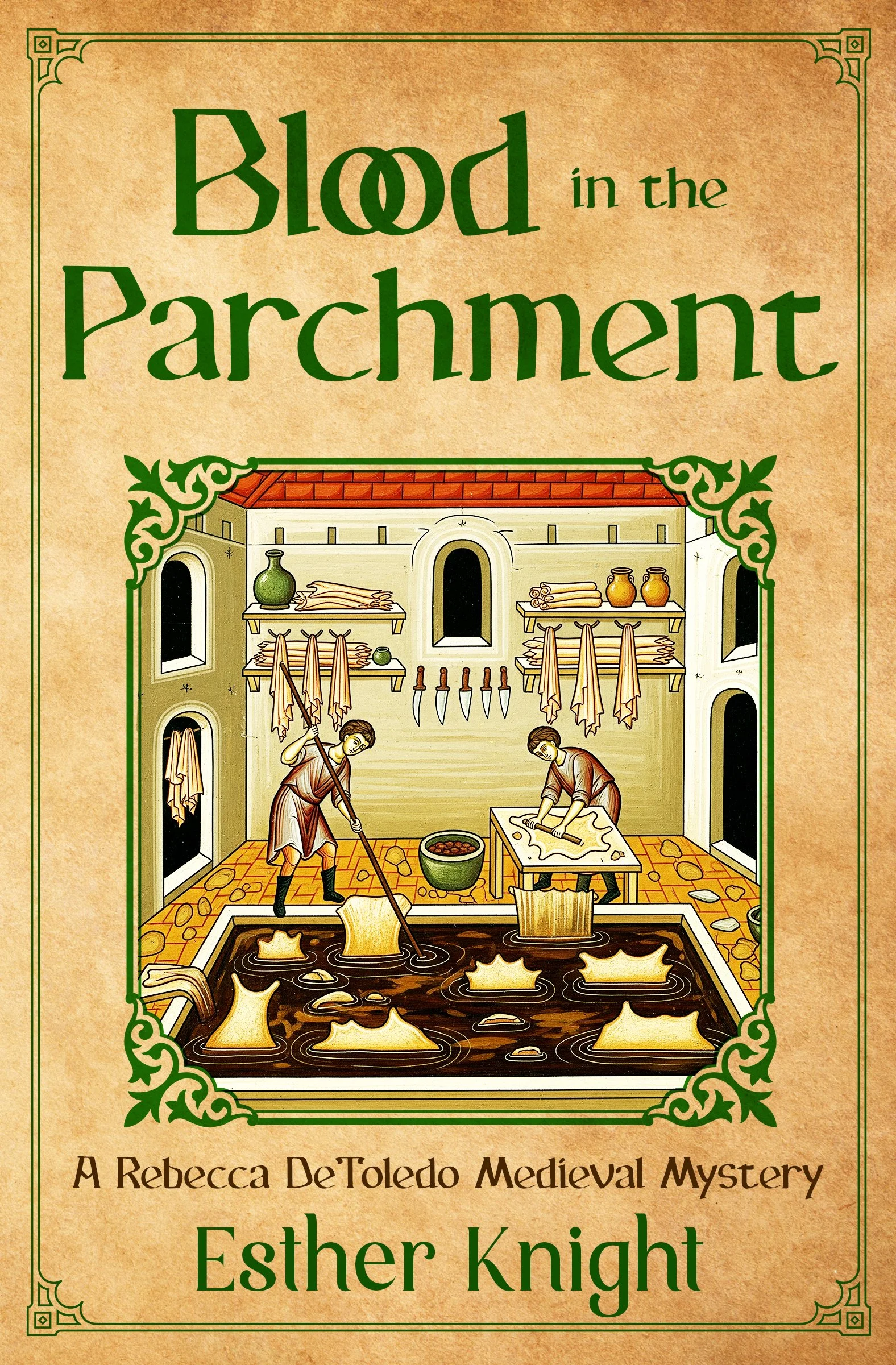
Blood in the Parchment (Rebecca DeToledo Medieval Mystery Book 2)

Poison in the Season of Peace (Rebecca DeToledo Medieval Mystery Book 3)
This page contains affiliate links. Cozy Crime Reads may earn a small commission if you click on a link and make a purchase. This happens at no extra cost to you.